I was once told that being an author isn’t something you do, it is something your are.
I find that conflicting with other information stored in my mind. While it may become something you are, you have to get better—the only way to get better is practice, practice and more practice.
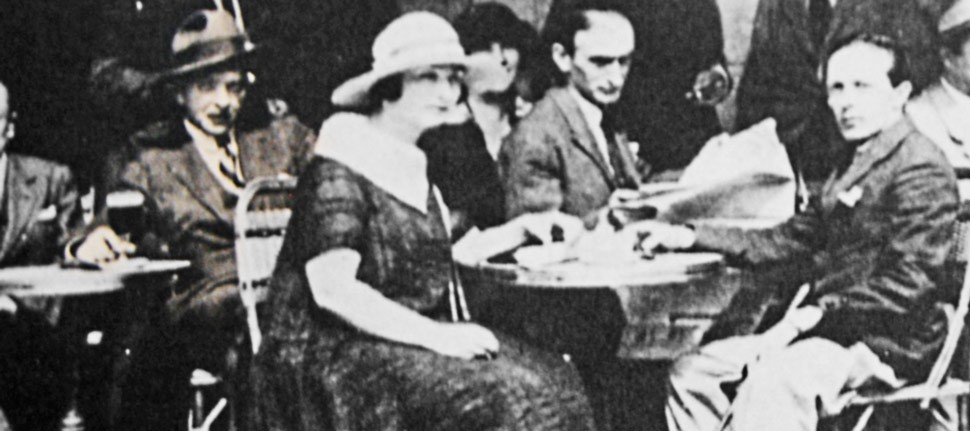
If that is true, does that mean you aren’t an author when you start creating stories? I mean, writing is an authors life isn’t it? Should there be other elements to it? What of the smoky coffee dens that authors used to sit in and write? I find I cannot write well without at least the coffee dens, if nothing else…
I know others who write on their electronic-AI-imbued, grammarly assisted typing devices. Perhaps I am old-school, but I always preferred the feel of pen and paper. Hell, I just graduated to the age of mobile computers a few years back. I can still bat out three to four pages of foolscap paper (both sides) in a couple of hours, yet I often sit in front of my beaten old tablet for far too long before I start actually typing words. I find just the pen and paper more liberating. I find the computer too full of distractions—all the little flashy lights and reminders and emails and whatnot take my mind away from the story I am trying to tell.
Don’t get me wrong, I’ve worked in and around computers and I.T. nearly all of my life. From the beginning of the 8088 period through the 286 and then, the upgrade to the 486s (it was a POWER machine) and continued all the way down the line to my present i7 with a triple-monitor setup, 32 gB of ram and 17 tB of HDD drive stacked in it. (Lately, I’m wanting to build an AMD Thread-Ripper box, just for fun.)
Still, when I’m being an author, all that is nothing more than fancy, non-essential fodder for the brain. How can you focus on writing if there is a †jillion (that’s a mega-huge number, I’m sure) other distractions going on right in front of your face? It’s a large part of the reason I take myself away from my home—with all its familiarity and the comfort-level diversions—and escape to a place where I can just be free in my mind to imagine, fantasize and just focus on the job at hand.
Yet, I know another author who has sat in her office at home and penned (that’s an antiquated word in this year and day) somewhere around a half-dozen books. While I find that amazing, I know myself too well, I’d be playing games, watching videos, or photoshopping pimples on to random people’s faces and re-uploading them.
To that end, I have stripped down my tablet to just the most bare-bones machine that windows 10 can get. I can only check email consciously, I have nothing but a copy of OpenOffice and Chrome on it. (Chrome only for the fact that I get all twitchy when I can’t look up the context or definition of a word popping into my head every so often.) I carry that with me to whatever coffee shop looks like it might have the right ambient atmosphere for me and sit and write. Practice, practice, practice…
I guess the summary to this random rant might be, sometimes one has to step outside their comfort zone in order to press themselves to do better—even if you are an author. If you live it, there are times that the vision for something more can come from the arbitrary actions of an unknown stranger.
How will you going to find that sequestered away in your unconnected ambivalence?
Footnotes:
† A jillion is an enormous number of something. If your next door neighbor has too many cats to count, go ahead and say they've got a jillion cats.
Similar to words like zillion, tons, or oodles, jillion is perfect for talking about a huge but vague number. It's also hyperbolic—in other words, it's an exaggeration. The word is modeled on actual numbers like million and billion, so it almost sounds like a real quantity. But like zillion, jillion is imprecise. Its origin is vague too, described as an "arbitrary coinage" first used around 1940.
Cite:https://www.vocabulary.com/dictionary/jillion